Agricultural residues are generated at scale across forestry, farming, and food processing operations. Straw, pruning waste, husks, shells, and sawdust often accumulate faster than conventional disposal pathways can absorb. Converting these materials into biochar offers a controlled, value-oriented alternative. By applying thermochemical conversion under oxygen-limited conditions, biochar production equipment reduces volume, stabilizes carbon, and creates a multifunctional soil amendment while mitigating open burning and landfill dependence.
Agricultural Residues as a Feedstock Challenge
Crop residues vary widely in bulk density, ash content, and lignocellulosic composition. This heterogeneity complicates logistics and downstream utilization. Traditional disposal practices—field burning or uncontrolled decomposition—release particulates and greenhouse gases without recovering value. Modern biochar equipment addresses this challenge through adaptable feedstock handling, calibrated residence time, and temperature control. The result is predictable conversion behavior across diverse agricultural inputs, from orchard trimmings to rice husk fines.

Process Fundamentals and Equipment Architecture
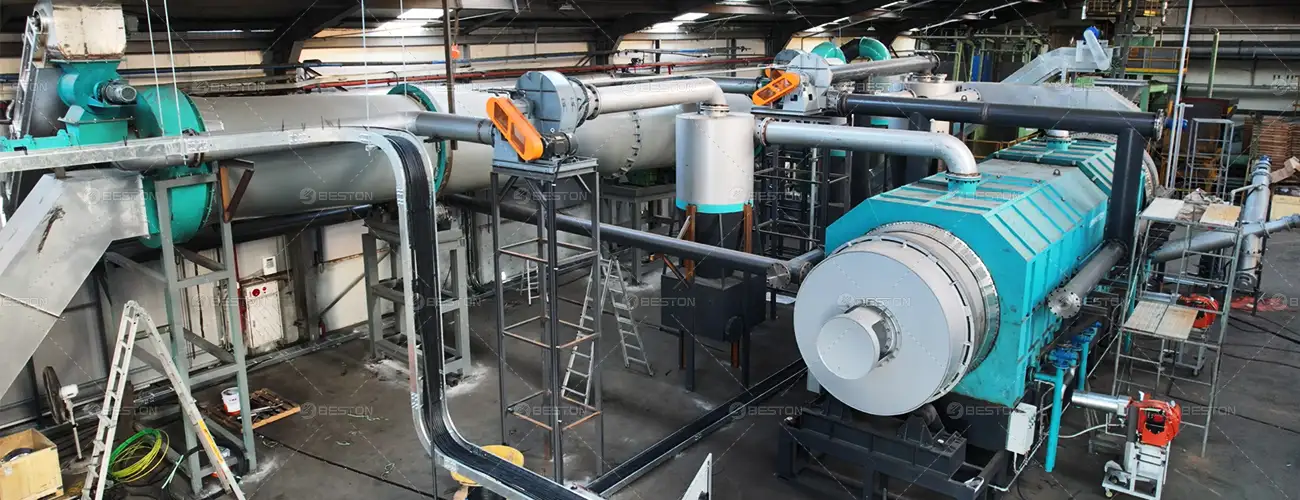
At the core of biochar production is slow or intermediate pyrolysis. Heat is applied in an oxygen-deficient environment to volatilize organics while preserving a stable carbon matrix. Contemporary systems integrate pre-drying, sealed reactors, and thermal recycling. A wood to charcoal machine exemplifies this architecture by combining continuous feeding with insulated retorts, enabling steady-state operation and consistent char yield. Short cycles improve throughput; longer dwell times enhance fixed carbon content. Both are tunable.
Densification and By-Product Utilization
Low-density residues impose transportation penalties. Densification mitigates this constraint. A sawdust charcoal briquette machine compresses fine particles into uniform shapes, improving handling efficiency and combustion characteristics when biochar is repurposed as a solid fuel or carrier medium. Briquetting also standardizes moisture and particle size, which stabilizes downstream pyrolysis kinetics. Off-gases recovered during conversion can be recirculated for process heat, reducing net energy input.
Specialized Feedstocks and Regional Optimization
Certain residues demand specialized configurations. Coconut shells, for instance, exhibit high lignin content and produce a hard, porous char with favorable adsorption properties. A coconut charcoal machine is engineered for shell geometry and higher devolatilization temperatures, delivering consistent pore structure and mechanical strength. Such specialization enables regional optimization, aligning equipment selection with dominant agricultural by-products and local market demand.
Environmental and Agronomic Outcomes
Biochar application improves soil cation exchange capacity, water retention, and microbial habitat while sequestering carbon over long time horizons. From a systems perspective, deploying biochar equipment converts diffuse waste streams into a stable resource. Emissions are controlled, nutrients are retained, and the agricultural cycle closes more tightly. The reduction in waste volume simplifies on-farm management and lowers external disposal costs.
Implementation Considerations
Successful deployment depends on feedstock assessment, scale matching, and regulatory alignment. Modular designs allow incremental capacity expansion. Automated controls enhance safety and reproducibility. When integrated thoughtfully, biochar production equipment functions not merely as a waste processor, but as a core asset in circular agricultural infrastructure—transforming residue liabilities into durable environmental and economic value.